
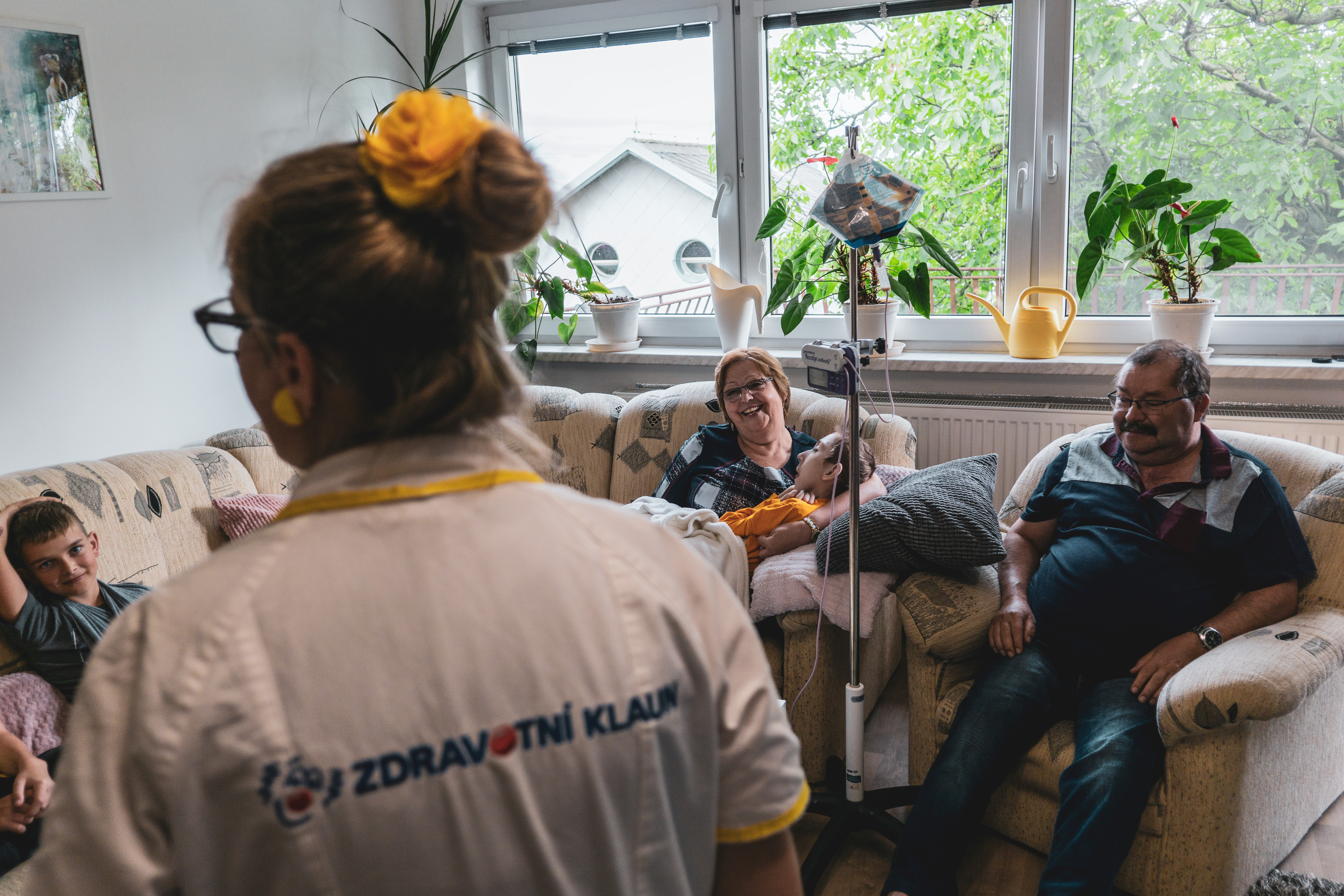
Families with seriously ill children face a whole range of unexpected challenges that go beyond just health issues. They often lack social contact with their surroundings, and the child's illness affects not only the parents but also the siblings. In such a difficult situation, it is not easy to experience a sense of relief and joy. Based on their many years of experience, the Health Clowns offer support tailored to the specific needs of all family members.
Through their work, healthcare clowns want to be part of the debate on the needs of seriously ill children and their families. Based on our many years of experience, we know what our role is in the palliative care team. We also know that our involvement may not suit every family and their needs, and we always come at the invitation of the family.
We actively seek to raise awareness about palliative care in the public sphere and in cooperation with our partners in the healthcare sector and palliative care teams, addressing specific topics such as the needs of families and ways to bring them relief in the most difficult moments and at least temporary forgetfulness and a sense of "normality" through laughter.
Our experience
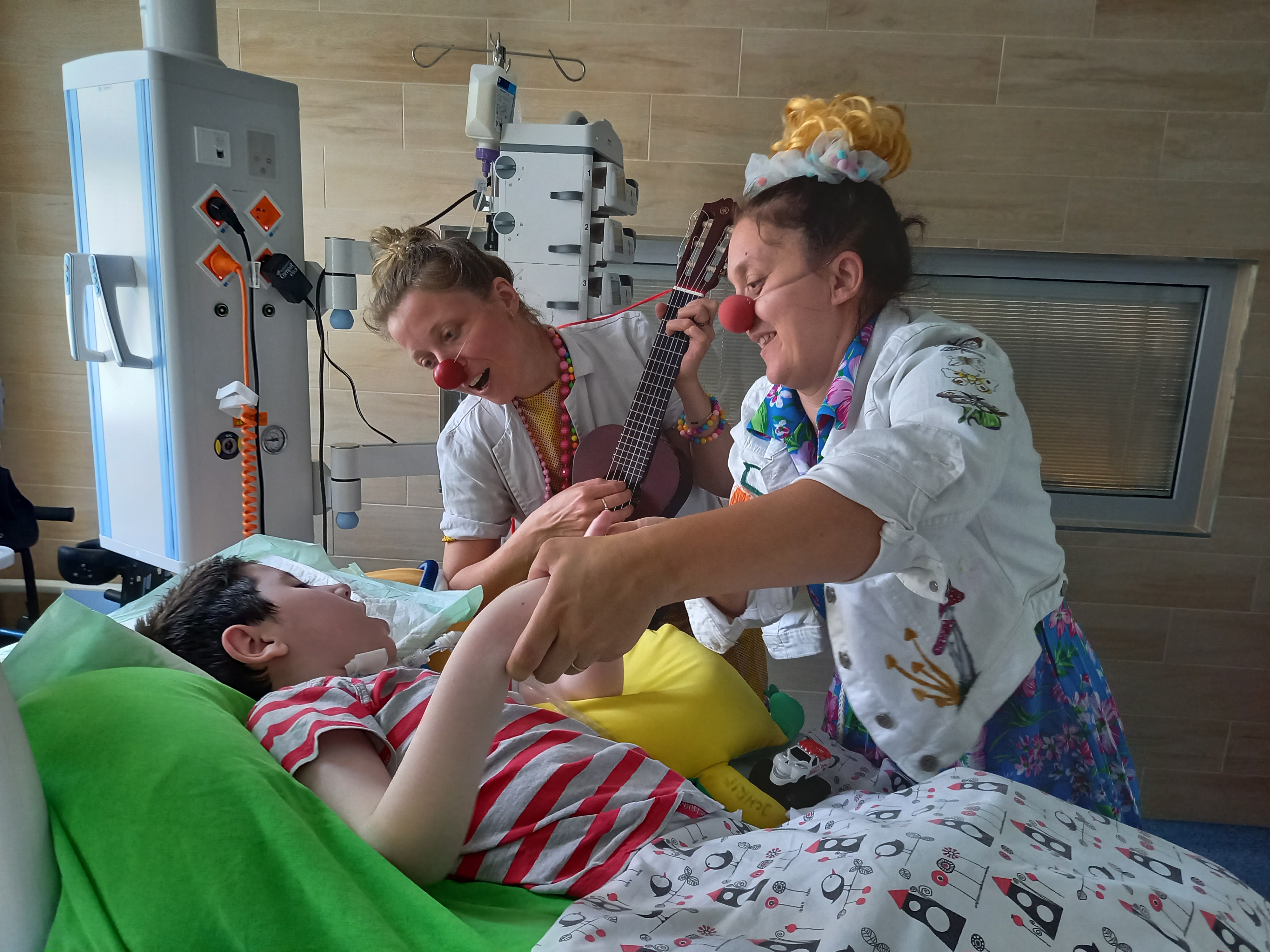
- Health clowns have more than twenty years of experience with programmes for seriously ill children during examinations, procedures, hospital stays and home visits.
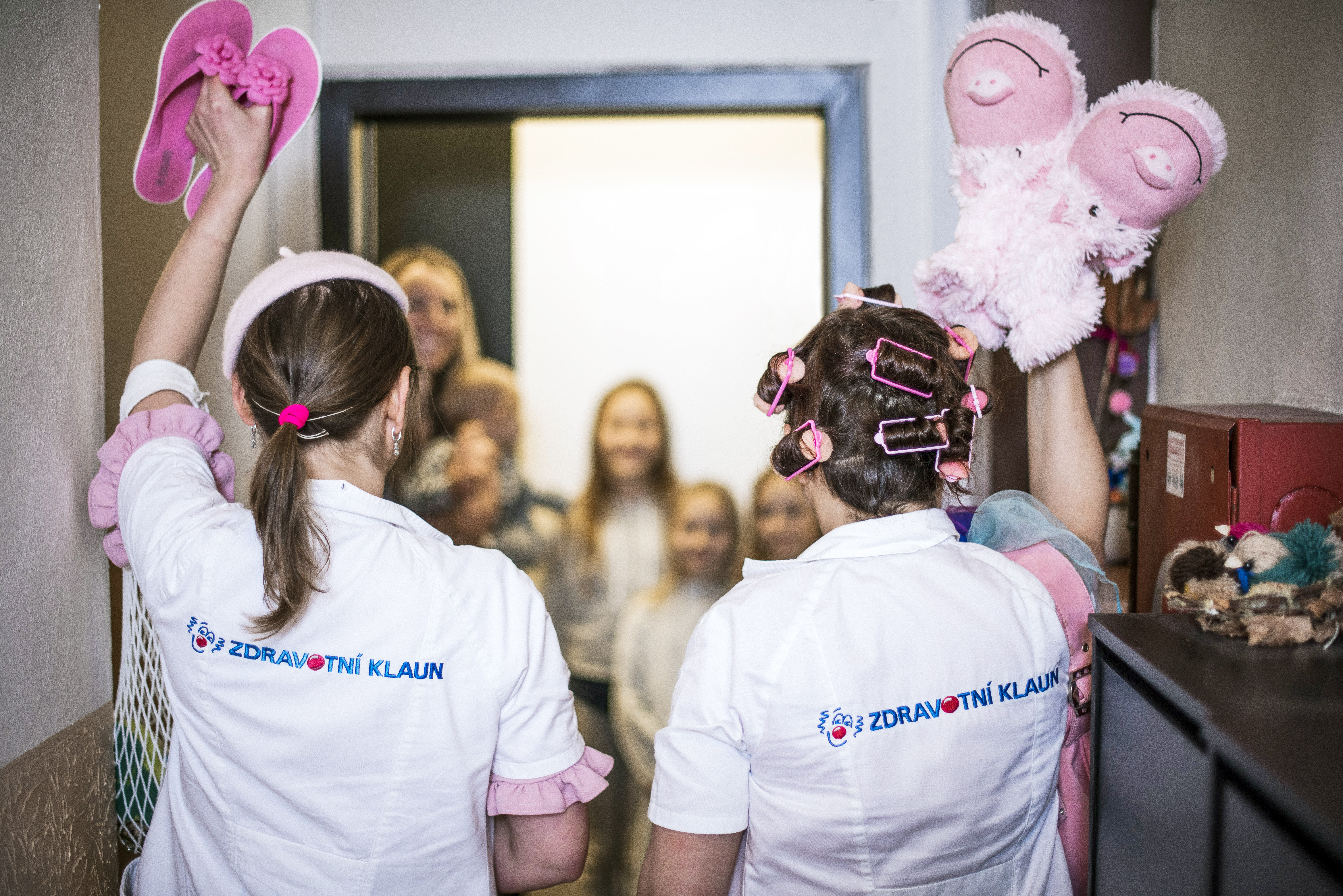
- For more than 10 years, we have been visiting paediatric patients in their home environment as part of the Přezůvky máme! (We Have Slippers!) programme. A specially trained team of Health Clowns combines experience from the hospital environment with professional training in palliative care. We are very pleased to have established cooperation with the children's palliative care team at Motol University Hospital, the Provázení centre at Brno University Hospital, the Strom života mobile hospice and the Ondrášek mobile hospice. We are also deepening our partnership with the Vlček Family Foundation and Domov pro Julii.
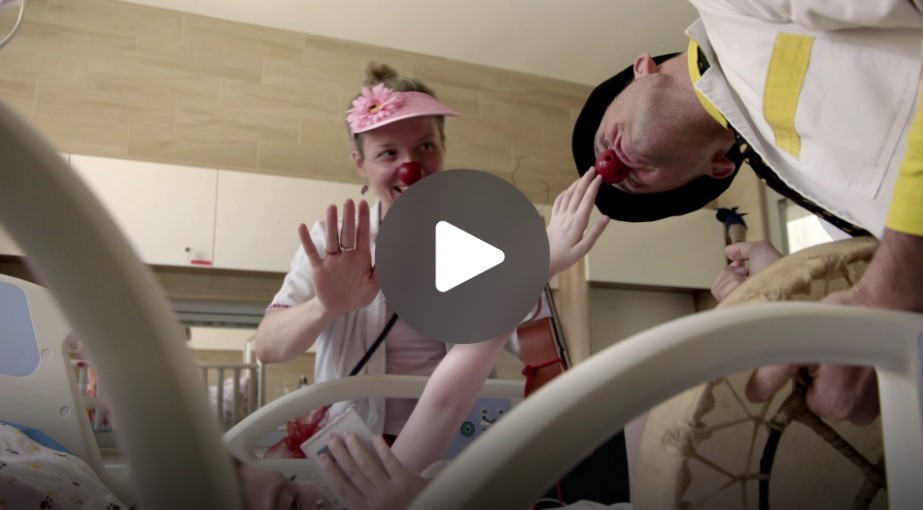
- Health clowns regularly visit children in the Follow-up Intensive Care Unit (NIP) at Hořovice Hospital and the Military Hospital in Olomouc. A documentary entitled Mocný zvuk (The Powerful Sound) was made at Hořovice Hospital, capturing the effects of music therapy as a means of communication between clowns and young patients.
- We draw on our experience from the Child programme, in which a clown becomes a partner to the child and the whole family, including palliative care teams (they can accompany the child to repeated procedures when the child is having a hard time in hospital, even if only as an outpatient, and can be with the child during family consultations with the palliative care team).
- Virtual clown shows (we can also connect with our friends online to have more frequent contact).
How Health Clowns help
- INTEGRATION INTO EVERYDAY LIFE
Families are often exposed to social isolation, which arises through no fault of their own and, above all, not because they want it. Health clowns use playful communication to try to restore a sense of integration into the normal world and functional interpersonal relationships. Clowns are neither therapists nor friends or relatives, yet their approach brings a very immediate feeling of joy and relaxation to all family members present. This method of communication, which clowns learn through long training, has been taught for many years by our experts at two medical faculties and medical schools. Another benefit can be support when consultations with support teams are necessary, as the clowns can devote their attention to the child and both parents have time to participate in the conversation.
- JOY AND DISTRACTION FOR THE WHOLE FAMILY
During their performances, medical clowns focus primarily on the sick child, but they naturally involve other family members and everyone else present (e.g., medical staff). The clowns' presence brings distraction and joy to siblings, who sometimes do not receive the necessary amount of attention and energy.
- RELIEF THROUGH JOY
Even in adverse situations, children and parents have the right to experience moments of joy. Clowns do not force anyone to be happy and always adapt to the situation and needs of the family – thanks to their non-coercive and natural approach, families often manage to let go of their worries in the present moment and experience moments of rest and joy.